



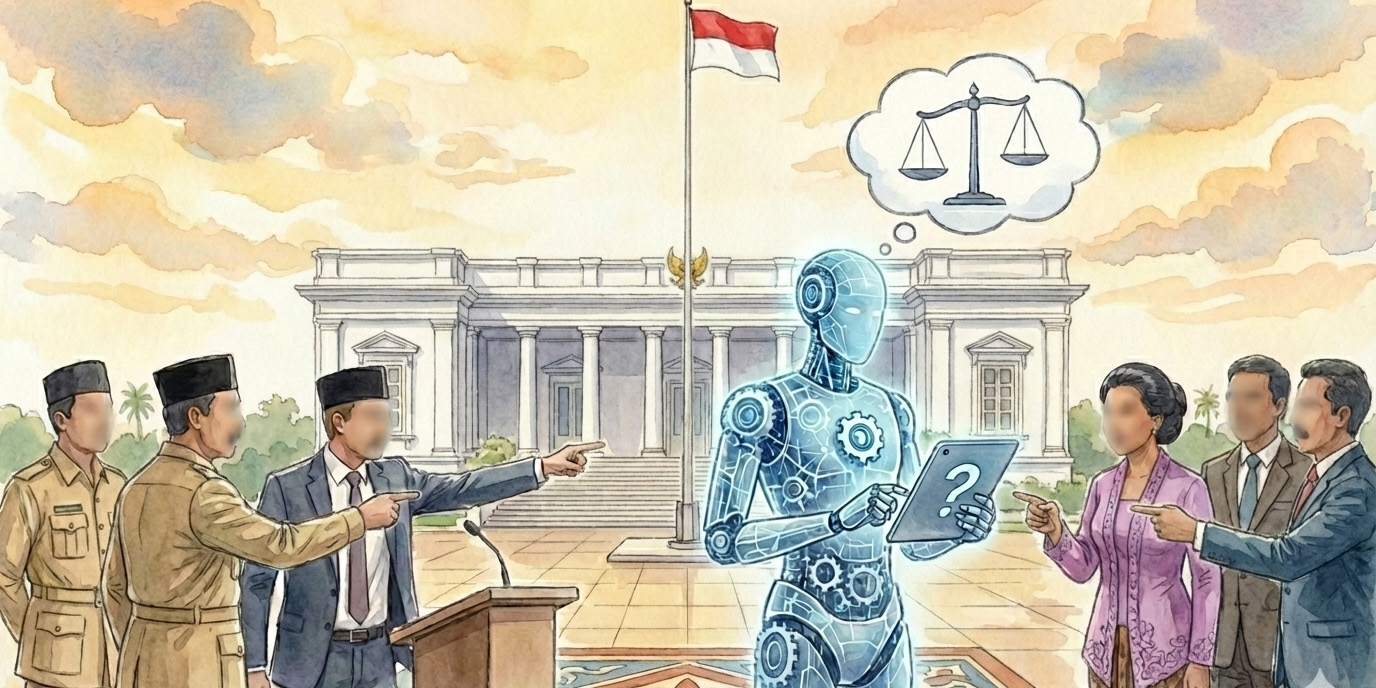
 Can artificial intelligence end the political blame game?

Penulis

In the unstable world of global politics, it often seems that legitimacy is more valuable than truth. When crises happen, such as high inflation, social unrest or military failure, leaders face a difficult choice that could decide their political survival. They can either accept responsibility, which puts their position at risk, or play it safe by blaming someone else.
History suggests that the second option, often called the "blame game", is the standard method for political survival. This should be understood not just as a way to speak to the public, but as a strategic tool used by governments to protect themselves from being held responsible.
One of the clearest historical examples of this strategy can be found in the Soviet Union during the mid-20th century. When Nikita Khrushchev denounced Joseph Stalin in 1956, it was likely not an attempt to destroy the totalitarian system, but an effort to save it. By blaming all the horrors of that era solely on Stalin, the Soviet elite performed a political maneuver that allowed them to restore the Communist Party’s image.