



 The Panglossian Trap of Military Overstretch


Penulis

Abstract
This article argues that Indonesia’s defense strategy is ensnared in a “Panglossian Trap”—an optimistic illusion that its current posture is sufficient, despite chronic underfunding and a diffusion of military focus on non-war operations that erode core warfighting capabilities. To escape this trap, the article proposes a dual transformation: a conceptual shift to a “Ministry of War” mindset to refocus the Indonesian National Armed Forces (TNI) on deterrence and combat readiness, and the establishment of a dedicated Cyber Force (Angkatan Siber). To finance this modernization, it critiques Keynesian, Monetarist, and Modern Monetary Theory (MMT) paradigms, advocating instead for a pragmatic hybrid economic model to sustainably raise defense spending to 2.5-3% of GDP. The geopolitical payoff of this strategic pivot would be a transition from passive strategies like bandwagoning or hedging to a proactive balancing role in the Indo-Pacific.
The Illusion of Leibniz
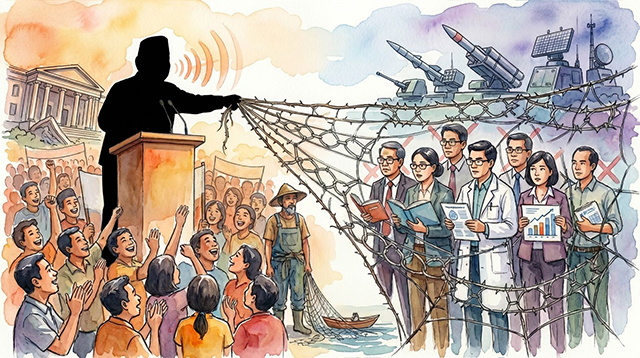
At the age of 80, the Panglossian trap still appears in Indonesia’s defense strategy and posture. This trap arises due to an optimistic illusion that tends to view the current situation as the best, thus denying the necessity for change. This Pangossian Trap introduced by Voltaire as a sharp critique of Leibniz’s optimistic illusion.
In the early 18th century, the German philosopher Gottfried Wilhelm Leibniz proposed an optimistic worldview in his theodicy, arguing that despite apparent evils, we live in “the best of all possible worlds. This idea drew sharp criticism from the French Enlightenment thinker Voltaire, who, horrified by the 1755 Lisbon earthquake that killed tens of thousands, satirized Leibniz’s philosophy in his novella Candide. Through the character Dr. Pangloss—a tutor who clings to blind optimism amid catastrophe after catastrophe—Voltaire coined the term “Panglossian” to describe delusional positivity that ignores harsh realities. This intellectual debate highlights how unchecked optimism can trap individuals and societies in denial, a concept that resonates today in various fields, including military strategy.
Echoing this historical critique, Indonesia’s defense posture today falls into a similar Panglossian Trap, where the belief persists that the current system is somehow optimal despite mounting evidence of decline. To safeguard its sovereignty and secure its national interests, Indonesia must treat defense modernization as an absolute prerequisite, not a mere policy option. However, this imperative is hindered by a dangerous institutional delusion and a failure of economic imagination. The Indonesian National Armed Forces (TNI) is ensnared in this trap—a deep-seated conviction that its sprawling defense framework is the best possible, even as core warfighting capabilities erode. This illusion is fueled by chronic underfunding, with defense spending lingering at a meager 0.8-1% of GDP, and a strategic culture that dilutes the TNI’s focus with non-war operations ranging from disaster relief to infrastructure development.
This writing is a deeper elaboration of several previous writings, namely:
- A 5 percent defense trap: Indonesia’s path to strategic balance. The Jakarta Post, 1 June 2025.
- Israel-Iran clash: Navigating the black swan of a regional war. The Jakarta Post, 16 June 2025
- The Complexity of Operation “Midnight Hammer”. Kompas, 30 Juni 2025.
- The shadow of Fordow: Navigating nuclear stability in a multipolar world. The Jakarta Post, 4 July 2025.
- Indonesia’s Defense Economic Engine, Kompas, 18 September 2025
- Indonesia’s Defense Overstretch Dilemma. The Jakarta Post, 6 Oktober 2025
From a Ministry of Defense to a “Ministry of War”
The origins of this Panglossian mindset trace back to the New Order era, where the military’s role intertwined deeply with internal governance, social development, and nation-building. This legacy creates the false impression that involving the TNI in everything from counterterrorism to environmental conservation builds national resilience. In truth, this diffusion of efforts drains resources, erodes combat readiness, and leaves the forces ill-equipped for high-intensity conflicts, such as potential maritime tensions in the South China Sea.
To overcome this, Indonesia can look to a bold American precedent for inspiration. President Donald J. Trump’s executive order, signed on September 5, 2025, renamed the U.S. Department of Defense as the Department of War, restoring its pre-World War II title to emphasize a “warfighting” ethos and “warrior culture”. Trump contended that the 1947 shift to “Defense” had dulled the institution’s sharpness, allowing non-combat distractions to overshadow its primary mission. The order, which designates “Department of War” as a secondary title, requires a thorough review of ancillary roles, reassigning to civilian entities. It prioritizes rebuilding deterrence, rapid mobilization, and victory in peer conflicts against threats from China and Russia. Accompanying measures include cutting administrative costs by 15%, redirecting funds to cutting-edge weapons, and mandating warfighting simulations across branches. While critics label it as provocative militarism that might heighten global tensions, proponents see it as a vital cultural reset.
Adapting this approach, Indonesia could conceptually transform its Ministry of Defense into a “Ministry of War,” not to promote aggression but to underscore an unwavering focus on deterrence and victory. This change would compel the transfer of non-military duties to civilian agencies, such as the National Disaster Management Authority for relief or the National Cyber and Crypto Agency for digital security, dismantling the notion that the TNI must handle all tasks. By prioritizing an optimum essential force, the TNI could optimize its 400,000 personnel, acquire advanced assets like submarines and fighter jets, and cultivate a professional ethos free from domestic burdens.
As a further breakthrough to reinforce this warfighting mindset, Indonesia should establish a dedicated Cyber Force, or Angkatan Siber, as a fourth branch of the armed forces alongside the army, navy, and air force. This new entity would specialize in cyber warfare, information operations, electronic warfare, and digital defense, ensuring the TNI is fully prepared for modern hybrid threats that blend physical and virtual domains. By integrating cutting-edge cyber capabilities directly into the military structure—recruiting top hackers, AI experts, and cryptographers—the Angkatan Siber would enable offensive operations to disrupt adversaries’ command and control systems. This initiative would symbolize Indonesia’s commitment to a comprehensive “Ministry of War” ethos, adapting to 21st-century battlefields where dominance in cyberspace is as crucial as control of sea lanes or airspace, thereby enhancing overall deterrence and strategic autonomy.
Yet, even this strategic pivot requires robust funding to succeed, leading to the next critical challenge.
Designing the Defense Economy Engine
Without financial backing, any refocus remains theoretical. The key issue is not whether to modernize but how to fund it sustainably, framing an ideological battle among economic perspectives. This debate is not abstract; it draws on centuries of economic thought, from classical liberalism to contemporary heterodox theorie, This debate has real implications for nations like Indonesia, where fiscal constraints collide with geopolitical necessities. At its core, the contest revolves around how governments manage money, debt, and resources to fuel defense without destabilizing the broader economy. Historical precedents abound, from World War II’s massive expenditures that pulled economies out of depression to post-Cold War austerity measures that hollowed out militaries. For developing countries, these choices are amplified by vulnerabilities like commodity dependence, foreign debt, and inflation pressures, making the selection of an economic model a high-stakes endeavor.
This contest unfolds across three main paradigms, each offering distinct mechanisms for financing defense while grappling with trade-offs in growth, stability, and inflation. To fully appreciate the nuances, it’s essential to balance the pros and cons of each, drawing on empirical evidence and real-world applications to inform Indonesia’s path forward.
The Keynesian Engine represents one of the most influential schools, rooted in the ideas of British economist John Maynard Keynes, who in the 1930s advocated for government intervention to combat economic downturns. Keynes argued that during recessions, private sector demand collapses, leading to unemployment and underutilized capacity; thus, governments should step in with deficit spending to stimulate aggregate demand.
Applied to defense, this becomes “military Keynesianism”, where ramped-up military budgets act as a fiscal multiplier, injecting money into the economy and creating ripple effects. For instance, every rupiah spent on building warships or tanks not only equips our military but also generates jobs in manufacturing, boosts supplier industries like steel and electronics, and spurs innovation in dual-use technologies. During World War II, U.S. defense spending surged to over 40% of GDP, with federal deficits reaching unprecedented levels, effectively ending the Great Depression by employing millions and revitalizing industries.
The empirical evidence supports this view, showing that a rise in defense expenses stimulates demand, boosting purchasing power, aggregate output, and generating positive externalities like technological spin-offs that benefit civilian sectors, such as aviation or computing advancements from military R&D. Advocates highlight how military spending can combat recessions by sidestepping conservative ideologies that oppose welfare expansions, instead channeling funds into “patriotic” investments that maintain full employment and stimulate growth in the short run. In Indonesia’s context, targeting 2.5% of GDP on defense could create thousands of jobs in state-owned enterprises like PT PAL (shipbuilding) or PT Pindad (armored vehicles), fostering industrial clusters in Java and Sumatra while addressing youth unemployment. Proponents argue deficits are justifiable as investments in national security and productive capacity, especially in a post-pandemic world where fiscal stimulus has proven effective in recoveries like the U.S. under Biden’s infrastructure bills. Additional pros include the ability to promote technical innovation, as military expenditure often leads to breakthroughs that trickle down to the economy, enhancing overall productivity and competitiveness. Moreover, in times of economic slowdown, this approach can provide a “golden age” of stability by sustaining aggregate demand and preventing deflationary spirals, as seen in post-war economies where defense outlays supported booms.
However, the cons of Keynesian military spending are equally compelling and warrant careful consideration to avoid pitfalls. Critics argue that while beneficial in the short run, its long-term viability is questionable, as it may divert resources from more productive civilian sectors, leading to opportunity costs where funds could have been invested in education, healthcare, or infrastructure for higher returns. Those nations that prioritize arms over productive investments eventually face competitive disadvantages, as exemplified by how Germany and Japan post-World War II gained economic edges by focusing on civilian industries while others grappled with military burdens. Furthermore, funding via borrowing can provoke domestic opposition, as paying for wars through debt rather than taxes risks political backlash and unsustainable interest payments that crowd out future budgets. The “leakage” of stimulus abroad through imports of foreign military hardware, which Indonesia heavily relies on (e.g., from Russia or the U.S.), reduces domestic multipliers and fails to fully localize benefits. If growth falters, deficits could spiral into unsustainable debt, as seen in Greece’s crisis, or fuel inflation by overheating the economy.
For Indonesia, with its history of 1998 financial turmoil, unchecked Keynesian spending might exacerbate rupiah volatility and deter foreign investors seeking stability. Additionally, military Keynesianism can entrench a military-industrial complex, fostering inefficiencies, corruption, or unequal distribution of benefits, where gains accrue to defense contractors rather than the broader populace, potentially widening income gaps. Empirical studies also suggest that over-reliance on defense for stimulus can stifle long-term prosperity by prioritizing destruction-oriented investments over creative ones.
In opposition stands the Monetarist Brake, championed by economists like Milton Friedman, who emphasized controlling money supply to maintain price stability over active fiscal intervention. Monetarists view inflation as the primary economic evil, arising from “too much money chasing too few goods”, and argue that government borrowing for defense crowds out private investment by raising interest rates. This philosophy advocates conservative budgets—0.7%-1.5% of GDP for Indonesia—to prevent fiscal profligacy, prioritizing low inflation and balanced books to foster long-term growth through market forces. Examples include the U.S. in the 1980s under Reagan, where initial defense hikes against the Soviet Union were tempered by monetarist policies at the Federal Reserve, which hiked rates to curb inflation but also triggered a recession.
Pros for Indonesia include attracting foreign direct investment (FDI) by signaling fiscal responsibility, crucial for sectors like mining and manufacturing that underpin export-led growth. A stable rupiah would also ease debt servicing on international loans, allowing reallocations to education or health without military overreach eroding economic confidence. By targeting interest rates, monetarism can control inflation effectively, providing a neutral, independent framework often managed by central banks insulated from political pressures. This approach promotes overall economic stability, as money supply control determines short-run GDP and long-term price levels, preventing the booms and busts associated with discretionary fiscal policies. In defense budgeting, it encourages efficient allocation, avoiding wasteful spending that could distort markets, and supports private-sector innovation by keeping borrowing costs low for businesses. Historical successes, like post-IMF reforms in Indonesia during the Asian Financial Crisis, demonstrate how monetarist restraint stabilized currencies and restored investor trust.
Yet, the drawbacks of monetarism in defense contexts are significant, often leading to underinvestment and broader economic harms. By prioritizing stability, it can stifle growth through austerity, as raising interest rates to combat inflation crowds out not just government but private borrowing, increasing costs for infrastructure or R&D that could complement defense. Defense spending under this model may widen economic inequality, as benefits accrue unevenly—favoring elites in finance while neglecting job creation in labor-intensive sectors. Empirical evidence shows military expenditure can attenuate productivity by diverting funds, forcing tax hikes or cuts elsewhere that harm social programs. For Indonesia, chronic underinvestment risks widening the military gap with neighbors like China, limiting geopolitical options and exposing vulnerabilities. Monetarism’s focus on money supply ignores structural issues like unemployment, perpetuating cycles where defense cuts during crises exacerbate downturns, as seen in European post-Cold War militaries hollowed out by austerity. Critics also note that while easy to implement, it can lead to recessions from overly tight policies, and its political neutrality is illusory if central banks favor creditors over debtors.
Challenging both is the Modern Monetary Theory, a heterodox framework advanced by economists like Stephanie Kelton and Bill Mitchell. MMT posits that monetarily sovereign governments—like Indonesia, which issues its own fiat currency (Rupiah)—cannot “run out” of money; they can create currency at will via central bank operations. The real constraints are not fiscal but real resources: available labor, materials, and technology. Thus, Indonesia could fund defense modernization—even as high as 5% of GDP, by issuing rupiah for procurements, as long as spending builds domestic capacity without exceeding productive limits, thereby avoiding inflation. Proponents cite Japan, with debt over 250% of GDP yet low inflation due to underutilized capacity, or the U.S., which funds its $800 billion defense budget through Treasury issuance backed by the Fed.
For Indonesia, MMT offers liberation from austerity myths, enabling bold investments in indigenous defense tech, like drone production or cyber tools, while using taxes not to “pay for” spending but to control inflation by withdrawing excess money. This could accelerate self-reliance, aligning with goals like the Optimum Essential Force target. Advantages include flexibility during crises, such as funding rapid TNI expansions amid South China Sea tensions without hiking taxes that burden the poor. MMT supports full employment and social programs alongside defense, treating debt as low-risk due to currency control, and empowers governments to address inequalities by spending on public goods without borrowing constraints. It reframes fiscal policy as the primary macroeconomic tool, potentially raising growth rates in deficit-prone economies.
Nevertheless, MMT’s cons raise alarms, particularly for emerging markets. Critics warn that without bounds on debt, it invites inflationary consequences, as printing money beyond capacity can erode purchasing power, especially in resource-constrained nations. In Indonesia, with less institutional strength than the U.S., unchecked creation risks hyperinflation, as in Zimbabwe or Venezuela. Political abuse is a major drawback—corruption could divert funds—and global markets might punish perceived irresponsibility with capital flight. MMT increases government’s role excessively, potentially crowding out private initiative and fostering dependency. It overlooks how deficits threaten stability if investors lose confidence, leading to currency crises, and assumes perfect resource management, which history shows is rare.
No one paradigm suffices alone, so a blended strategy emerges as the path forward, particularly suited to developing nations where pure models falter amid hybrid challenges.
A Pragmatic Hybrid Model for Indonesia
To reach a defense target of 2.5-3% of GDP, Indonesia should integrate these ideas pragmatically, creating a tailored hybrid that leverages strengths while mitigating weaknesses. This approach draws from global examples, such as South Korea’s blend of Keynesian stimulus with monetarist stability, funding a world-class defense industry amid rapid industrialization. Start by adopting conservative neoclassical deregulation, inspired by Singapore, to attract private capital into TNI projects—offering tax breaks for joint ventures in shipbuilding or drones, infusing monetarist efficiency. Complement this with liberal neoclassical regulated markets, per South Korea, pairing defense hikes with social welfare to build public consensus, ensuring Keynesian multipliers benefit society broadly. Incorporate neo-Keynesian stimulus, as in Japan, using targeted spending to counter stagnation—e.g., defense contracts in underdeveloped regions to spur local economies. Finally, harness MMT for priority funding, creating rupiah for major acquisitions while using taxes and bonds for demand management, not repayment, to prevent inflation spikes.
This hybrid isn’t novel; studies on developing countries show positive growth impacts from balanced defense spending, as in Indonesia’s own post-Suharto era where military outlays correlated with GDP expansion through industrial spillovers. A quick win: reallocating 10% from the Free Nutritious Meals program could add $2 billion yearly, doubling funds without taxes, blending fiscal prudence with stimulus.
These economic choices ripple outward, reshaping Indonesia’s role on the world stage.
The Geopolitical Payoff
The implications of Indonesia’s defense choices extend far beyond domestic borders, fundamentally altering its geopolitical options in an increasingly multipolar world. A conservative Monetarist approach, with its emphasis on fiscal restraint and minimal spending, would likely condemn Indonesia to passive strategies that limit its agency. Chief among these is bandwagoning, where a weaker state aligns closely with a dominant power to gain protection and benefits. For Indonesia, this could mean deepening ties with China, its largest trading partner, by acquiescing to Beijing’s expansive claims in the South China Sea in exchange for economic investments under the Belt and Road Initiative. While this might yield short-term gains like infrastructure development and market access, it carries significant risks: erosion of sovereignty over disputed waters, increased dependency on Chinese capital, and potential backlash from domestic nationalists who view such alignment as a betrayal of Indonesia’s non-aligned heritage. Historically, bandwagoning has proven precarious; consider how smaller nations in Southeast Asia, like Cambodia, have navigated Chinese influence, often at the cost of strained relations with the U.S. and its allies. For Indonesia, the world’s largest archipelagic state with vital sea lanes like the Strait of Malacca under its purview, bandwagoning could invite exploitation, where economic leverage translates into political concessions, ultimately narrowing strategic autonomy.
Alternatively, under the same restrained fiscal model, Indonesia might opt for hedging—a more nuanced but still reactive posture that involves maintaining balanced relations with multiple powers without fully committing to any. This strategy, popularized in Southeast Asian diplomacy, allows Indonesia to engage economically with China while participating in security dialogues with the U.S., Japan, and Australia through frameworks like the Quadrilateral Security Dialogue (Quad) or ASEAN-led mechanisms. Hedging provides flexibility, enabling Indonesia to play off great powers against each other to extract concessions, such as technology transfers or aid. For instance, Jakarta could continue joint military exercises with the U.S. under the Comprehensive Strategic Partnership while signing trade deals with China. However, hedging’s inherent caution can lead to indecision in crises; during escalations in the Natuna Islands, where Chinese vessels have encroached on Indonesian exclusive economic zones, a hedging Indonesia might issue diplomatic protests without credible military backing, signaling weakness. Moreover, as global tensions rise—evidenced by the ongoing U.S.-China rivalry—hedging risks alienating both sides, leaving Indonesia isolated if superpowers demand clearer allegiances. Critics argue that hedging perpetuates the Panglossian Trap by assuming the status quo’s stability, ignoring how underfunded defenses could embolden aggressors, much like how the Philippines shifted from hedging to a firmer U.S. alliance after repeated South China Sea incidents.
In stark contrast, embracing a “Ministry of War” mindset, fortified by the proposed hybrid economic model, unlocks a more proactive geopolitical option: balancing. This strategy involves building sufficient military power to counterbalance threats independently or through coalitions, thereby asserting influence rather than merely reacting. For Indonesia, balancing would mean investing in asymmetric capabilities—such as anti-access/area denial (A2/AD) systems, including hypersonic missiles, unmanned aerial vehicles, and enhanced submarine fleets—to deter Chinese assertiveness in the South China Sea without direct confrontation. This approach aligns with Indonesia’s archipelagic geography, allowing it to control chokepoints and project power across the Indo-Pacific. Economically, the hybrid funding model would support indigenous defense industries, reducing reliance on foreign suppliers and fostering self-reliance akin to India’s “Atmanirbhar Bharat” program, which has seen collaborations with global firms for co-production of fighter jets and submarines.
To delve deeper into India’s model, the Atmanirbhar Bharat (Self-Reliant India) initiative, launched in 2020 under Prime Minister Narendra Modi, represents a comprehensive blueprint for transforming India’s defense sector from import-dependent to a global exporter and innovator. By 2025, this policy has achieved remarkable milestones, including the launch of Made-in-India semiconductor chips, which bolster high-tech defense applications like radar systems and electronic warfare. The initiative emphasizes domestic manufacturing through measures like banning imports of certain weapons, promoting public-private partnerships, and allocating budgets for indigenous R&D. For instance, India’s defense production soared to record levels in 2024-2025, driven by contracts worth billions with local firms like Bharat Electronics Limited (BEL) for advanced radar and communication systems. Key achievements include the indigenous development of the Tejas fighter jet, BrahMos supersonic missiles (in joint venture with Russia), and the Akash surface-to-air missile system, which have not only equipped the Indian Armed Forces but also generated exports to countries like the Philippines and Armenia. The policy’s vision extends to 2047, aiming for enhanced defense preparedness, strategic autonomy, and economic growth through a robust industrial base. By 2029, India targets ₹3 lakh crore (about $36 billion) in annual defense production and ₹50,000 crore ($6 billion) in exports, highlighting its emergence as a defense powerhouse. Operation Sindoor, a recent demonstration of self-reliance, showcased homegrown weaponry in live exercises, underscoring the initiative’s success in integrating advanced technologies like AI-driven drones and hypersonic vehicles.
For Indonesia, emulating this model means adopting similar reforms: establishing “positive indigenization lists” to prioritize local production, incentivizing foreign firms for technology transfers via joint ventures (e.g., with Turkey for drones or France for submarines), and investing in R&D hubs like those in Bangalore for defense tech. This would transition Indonesia from a buyer to a producer, creating jobs, reducing import costs (currently over 70% of defense procurement), and fostering innovation ecosystems. Challenges include building skilled workforce and supply chains, but successes like PT Pindad’s armored vehicles show potential. By 2030, Indonesia could aim for 50% indigenous content in procurements, mirroring India’s trajectory, thereby enhancing economic resilience and geopolitical leverage.
Central to this balancing strategy is the adaptation of advanced defense technologies tailored to Indonesia’s maritime domain, where asymmetric warfare—leveraging cost-effective, high-impact tools against superior foes—is key. Given Indonesia’s 17,000 islands and vast exclusive economic zone, priorities include unmanned aerial vehicles (UAVs), artificial intelligence (AI) for surveillance, electronic warfare systems, hypersonic missiles, enhanced submarines, and satellite-based early warning. UAVs, such as the Turkish Anka-S drones inducted in 2025, offer long-endurance maritime patrol, capable of 24-hour flights with payloads for reconnaissance, anti-submarine warfare, and strike missions. These enhance warfighting by providing real-time intelligence over disputed areas like the Natuna Islands, detecting intrusions early and enabling rapid response without risking manned aircraft. AI integration, as explored in Indonesian studies, bolsters maritime domain awareness by analyzing sensor data from radars and satellites to predict threats, automate targeting, and optimize fleet deployments. This technology adapts to hybrid threats, such as cyber intrusions or gray-zone tactics, by fusing data from multiple sources for predictive analytics, reducing human error and reaction times in high-stakes scenarios.
Electronic warfare (EW) systems, equipped on vessels like the Pattugliamento Polivalente d’Altura (PPA) class, disrupt enemy communications, jam radars, and protect against missile attacks through advanced radar electronic support measures. For Indonesia, adapting EW enhances asymmetric capabilities by neutralizing superior naval forces’ sensors, creating “denial bubbles” around key straits. Hypersonic missiles, traveling at Mach 5+, provide standoff strike options, outpacing defenses and deterring aggression; Indonesia could pursue joint development, similar to India’s BrahMos, for archipelagic defense. Enhanced submarines, like Scorpène-class with air-independent propulsion, enable stealthy patrols, anti-surface warfare, and intelligence gathering, crucial for underwater domain dominance in the Makassar Strait. Satellite technologies, including low-Earth orbit constellations for early warning, offer persistent surveillance, integrating with ground systems for total defense against hybrid warfare. Advanced communications tech, with a $22 billion defense budget opportunity, ensures secure, resilient networks for command and control. Collectively, these adaptations—UAVs for eyes in the sky, AI for smart decisions, EW for electronic superiority, hypersonics for speed, submarines for stealth, and satellites for oversight—transform the TNI into a force multiplier, enabling cost-effective deterrence, rapid escalation dominance, and integrated operations across domains. By localizing production via Atmanirbhar-inspired policies, Indonesia gains technological sovereignty, reduces vulnerabilities to sanctions, and positions itself as a regional exporter, amplifying its balancer role.
To truly harness these technologies and escape the Panglossian Trap, Indonesia must adapt the Revolution in Military Affairs (RMA)—a paradigm shift in warfare driven by technological innovations, information dominance, and integrated operations that render traditional mass-based militaries obsolete. RMA, conceptualized in the 1990s by U.S. strategists like Andrew Marshall, emphasizes precision-guided munitions, network-centric warfare, stealth, and rapid decision-making cycles to achieve “full-spectrum dominance”. For middle powers like Indonesia, adapting RMA is essential to leapfrog outdated doctrines, focusing on quality over quantity in an era where information is the ultimate weapon. This study involves analyzing historical and contemporary operations to extract lessons on integrating technology with strategy, adapting to hybrid threats, and ensuring interoperability across domains.
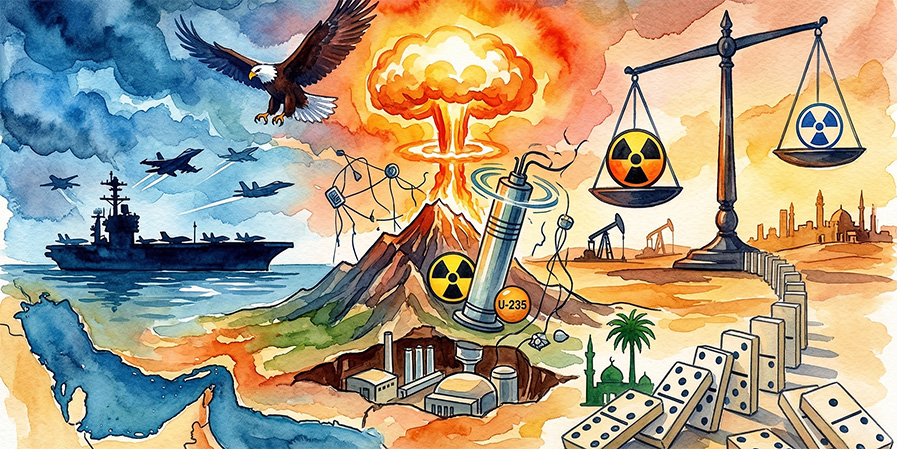
A prime case study is the U.S.-led Operation Midnight Hammer, executed on June 22, 2025, during the tail-end of the Iran-Israel war, which exemplifies RMA principles in action and offers invaluable insights for the TNI’s modernization. This operation targeted three heavily fortified Iranian nuclear facilities—Natanz, Fordow, and Arak—with a strike package involving seven B-2 Spirit stealth bombers armed with 30,000-pound GBU-57 Massive Ordnance Penetrators (MOPs) and over two dozen Tomahawk cruise missiles launched from naval assets in the Arabian Sea. The mission, shrouded in secrecy and involving 4,000 personnel at Whiteman Air Force Base, achieved tactical surprise through misdirection tactics orchestrated by U.S. Transportation Command (Transcom), which simulated routine logistics to deceive Iranian intelligence. Over 36 hours, the B-2s penetrated deep into Iranian airspace undetected, delivering precision strikes that destroyed underground bunkers designed to withstand conventional attacks, while Tomahawks provided suppressive fire against air defenses.
Examining Operation Midnight Hammer reveals how RMA transforms warfare through several key elements.
First, stealth and precision: The B-2’s low-observable design, combined with MOPs’ GPS-guided accuracy, allowed strikes on hardened targets with minimal collateral damage, embodying RMA’s shift from carpet bombing to “surgical” interventions. For Indonesia, this underscores the need to invest in stealth technologies, such as low-signature drones or submarines, to counter numerically superior adversaries like China in contested maritime zones.
Second, network-centric operations: The mission integrated real-time data from satellites, AWACS aircraft, and cyber reconnaissance to create a “common operational picture”, enabling synchronized attacks. This highlights RMA’s reliance on information superiority; Indonesia must develop similar C4ISR (Command, Control, Communications, Computers, Intelligence, Surveillance, and Reconnaissance) systems, perhaps through the Angkatan Siber, to fuse sensor data and outpace threats in the South China Sea.
Third, hybrid warfare integration: While details remain classified, reports suggest cyber operations preceded the strikes, disrupting Iranian radars and command networks, exemplifying RMA’s blend of kinetic and non-kinetic tools. For the TNI, studying this means prioritizing cyber-electronic warfare fusion, training forces in offensive hacking to neutralize enemy sensors before physical engagements. Fourth, rapid decision cycles: The operation’s success stemmed from compressed OODA (Observe, Orient, Decide, Act) loops, facilitated by AI-driven analytics that processed intelligence in real-time. Indonesia, with its vast archipelago, could adapt this by incorporating AI into command structures, reducing response times from hours to minutes during incursions.
Strategically, Midnight Hammer illustrates RMA’s geopolitical implications: It deterred Iran’s nuclear ambitions without full-scale invasion, showcasing “effects-based operations” that achieve objectives with minimal escalation. However, it also raises cautions—tactical triumphs can mask strategic illusions, as Iran’s proxies retaliated regionally, prolonging instability. For Indonesia, this warns against over-reliance on technology without diplomatic backing; RMA must complement ASEAN-led dialogues to avoid arms races. To study RMA effectively, Indonesia should establish think tanks analyzing operations like Midnight Hammer, conduct simulations, and collaborate with allies for tech transfers. By internalizing these lessons, the TNI can evolve into a RMA-enabled force, breaking free from outdated paradigms and securing strategic autonomy in an era of technological warfare.
Balancing offers multifaceted benefits. Regionally, a stronger TNI could lead ASEAN initiatives, transforming the organization from a talk shop into a credible security forum. Indonesia might spearhead joint patrols in contested waters, bolstering collective deterrence against unilateral actions by any power. Bilaterally, this posture would elevate Indonesia’s negotiations with the U.S., potentially securing advanced technologies like F-35 jets or Aegis systems through alliances like AUKUS extensions, while maintaining equidistance from China to avoid entrapment in proxy conflicts. Globally, balancing positions Indonesia as a middle power “balancer” in the emerging multipolar order, akin to how Turkey navigates NATO and Russia, or how Brazil influences South American dynamics. By integrating the Angkatan Siber, Indonesia could counter cyber threats from state actors, protecting digital sovereignty and even exporting cybersecurity expertise to allies, enhancing its soft power.
However, balancing is not without challenges. It requires sustained political will to overcome domestic resistance from factions favoring non-alignment, rooted in the 1945 Constitution’s emphasis on an “active and independent” foreign policy. Implementation could strain relations if perceived as provocative; for example, acquiring offensive capabilities might alarm neighbors like Malaysia or prompt Chinese countermeasures, such as economic sanctions. To mitigate this, Indonesia should couple military buildup with diplomatic outreach, perhaps reviving the Bandung Spirit of non-aligned solidarity through forums like the Non-Aligned Movement, positioning itself as a bridge between the Global South and developed powers.
Furthermore, elaborating on these options reveals hybrid variants that could suit Indonesia’s unique context. A smart approach might involve selective alignment with the U.S. for security while economically engaging China, but this demands a robust defense base to avoid over-dependence. Enhanced hedging could incorporate mini-lateral groupings, like the Indonesia-Australia Comprehensive Strategic Partnership, to build interoperability without full alliances. In balancing, Indonesia could pursue “internal balancing” by focusing on domestic capabilities or “external balancing” via coalitions, such as deepening ties with India through the Indo-Pacific Oceans Initiative to counterbalance China’s Indian Ocean ambitions.
The choice among these options hinges on escaping the Panglossian Trap. A modernized, war-focused TNI, backed by innovative funding, empowers balancing, granting Indonesia the leverage to shape regional outcomes—securing fishing rights, energy resources, and trade routes essential for its 270 million people. Without it, follower strategies like bandwagoning or hedging perpetuate vulnerability, as seen in how Vietnam has balanced against China through U.S. partnerships and domestic arms production, achieving greater strategic depth.
Conclusion
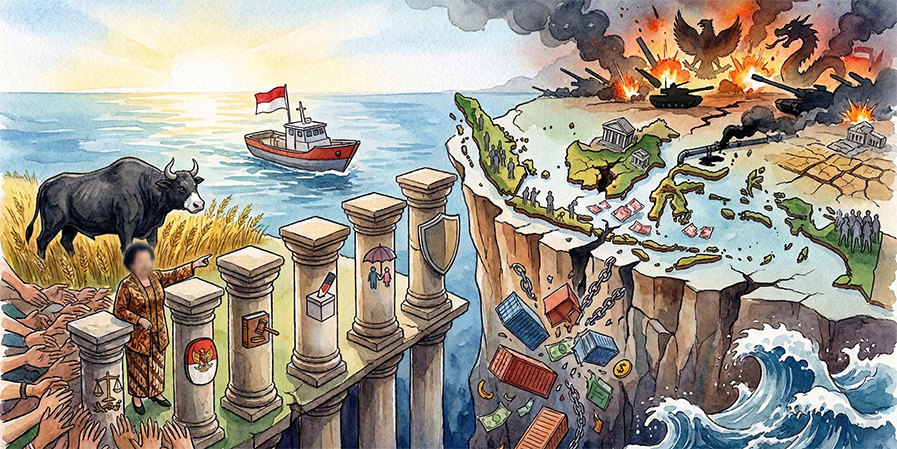
Indonesia stands at a strategic crossroads, faced with a choice between the comfortable delusion of the Panglossian Trap and the arduous path of genuine military modernization. To cling to the status quo—with its meager defense budget and an overstretched TNI entangled in non-military tasks—is not a strategy of prudence but a slow surrender of agency in an increasingly contested Indo-Pacific. The time for incremental change has passed. Escaping this trap demands a radical and integrated transformation, beginning with the conceptual rebirth of the Ministry of Defense into a “Ministry of War”. This is not a call for aggression but an urgent plea for focus: to unapologetically prioritize deterrence, combat readiness, and victory as the military’s ultimate purpose.
However, this strategic reorientation will remain a theoretical exercise without the economic engine to power it. The proposed hybrid funding model offers a pragmatic blueprint, blending fiscal discipline with targeted stimulus to build a defense industrial base capable of both equipping the TNI and fueling national economic growth. By adopting elements of India’s Atmanirbhar Bharat self-reliance initiative and adapting the principles of the Revolution in Military Affairs (RMA), Indonesia can leapfrog outdated doctrines and develop the asymmetric capabilities—from stealthy submarines and hypersonic missiles to a formidable Cyber Force—needed to secure its vast maritime domain.
Ultimately, these domestic reforms unlock Indonesia’s geopolitical destiny. A modernized, war-focused TNI empowers Jakarta to transcend the reactive and vulnerable postures of hedging or bandwagoning, instead embracing its rightful role as a proactive balancer. A strong Indonesia can anchor ASEAN as a credible security bloc, negotiate with global powers from a position of strength, and safeguard the vital sea lanes that are the lifeblood of the global economy. The path forward requires immense political will to overcome institutional inertia and diplomatic challenges. Yet, the alternative is to remain a passive spectator in a region being reshaped by others. The challenge is clear: Indonesia must shatter its optimistic illusions and forge a military truly fit for the 21st century.