



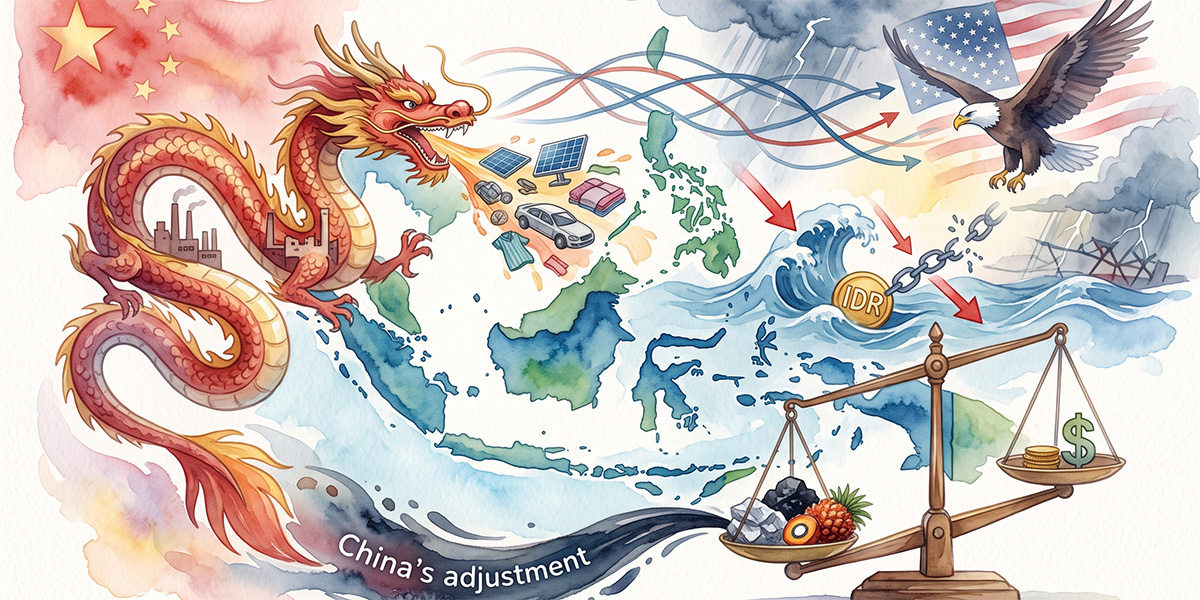
 Generated by AI

Penulis

In his 50th-anniversary essay for International Security, "The Iron Cage of International Anarchy," John Mearsheimer offers an argument worth stating plainly: with no overarching global authority to enforce order, great powers are trapped into competing for security, and that competition inevitably risks war. Dating the return of multipolarity to roughly 2017, when China and Russia consolidated great-power status, he frames the United States-China rivalry as the system's most dangerous flashpoint.
For Southeast Asia, the troubling part is his rationale for why a conflict in East Asia is far more plausible than a US-Soviet clash ever was. China has not fought a major war since 1979 and lacks the Soviet Union's visceral memory of devastation. It operates with few allies to constrain its impulses, while its claims over Taiwan and the South China Sea are driven as much by raw nationalism as by cold strategy.
Unlike Cold War Europe, East Asia lacks a rigid Iron Curtain; a naval skirmish remains conceivable where a land war in Europe was unthinkable. Mearsheimer forecasts at least one major crisis within the next half-century.