



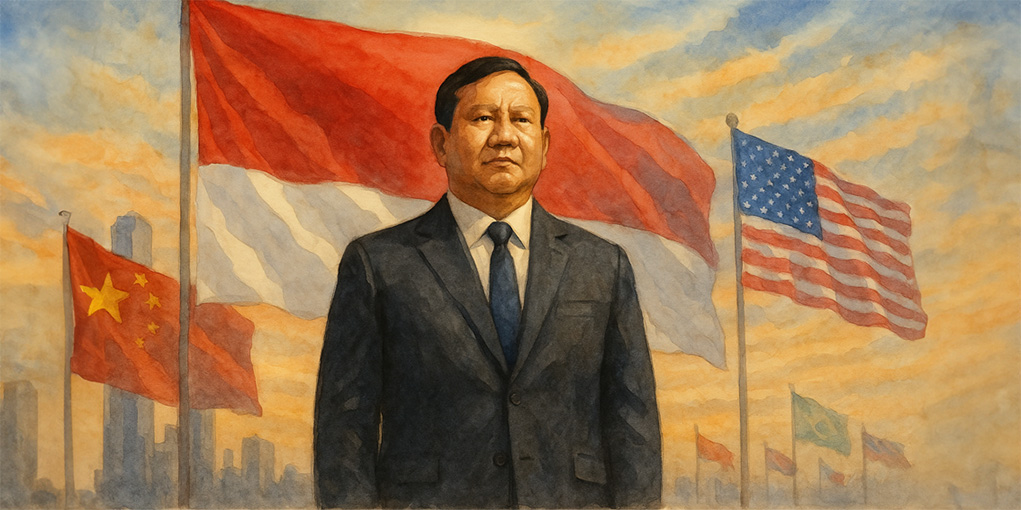
 Prabowo's high-speed diplomacy and Indonesia’s global ambition

Penulis

In global geopolitics, a leader’s narrative is often crystallized in a symbolic moment. For Joko "Jokowi" Widodo, it was his "Winter Is Coming" warning of a global economic storm, encapsulating a philosophy of risk mitigation. For Prabowo Subianto, the moment was different: an unexpected call for peace, "shalom", amid the Gaza conflict, signaling an approach that accepts risk to gain influence.
To understand this paradigm shift, we must examine the foundation laid during Jokowi's decade-long presidency, an era of defensive pragmatism. His assumption was simple: domestic stability and prosperity were the absolute priorities, and diplomacy was the instrument to achieve them.
Jokowi’s foreign policy was measured by concrete metrics: investment value, kilometers of toll roads and jobs created. His diplomatic energy was poured into bilateral relationships yielding tangible returns, reflected in repeated visits to China and intensive lobbying in Abu Dhabi.
The calculus was that China's rapid investment was the most efficient path to development, a wager where the risk of dependency was deemed lower than that of infrastructural stagnation. Yet, this strategy was not without peril. It created vulnerability to Beijing's economic slowdowns and cemented a global perception of Indonesia's "tilt" toward China, potentially eroding trust with the Western bloc.